MICAPP
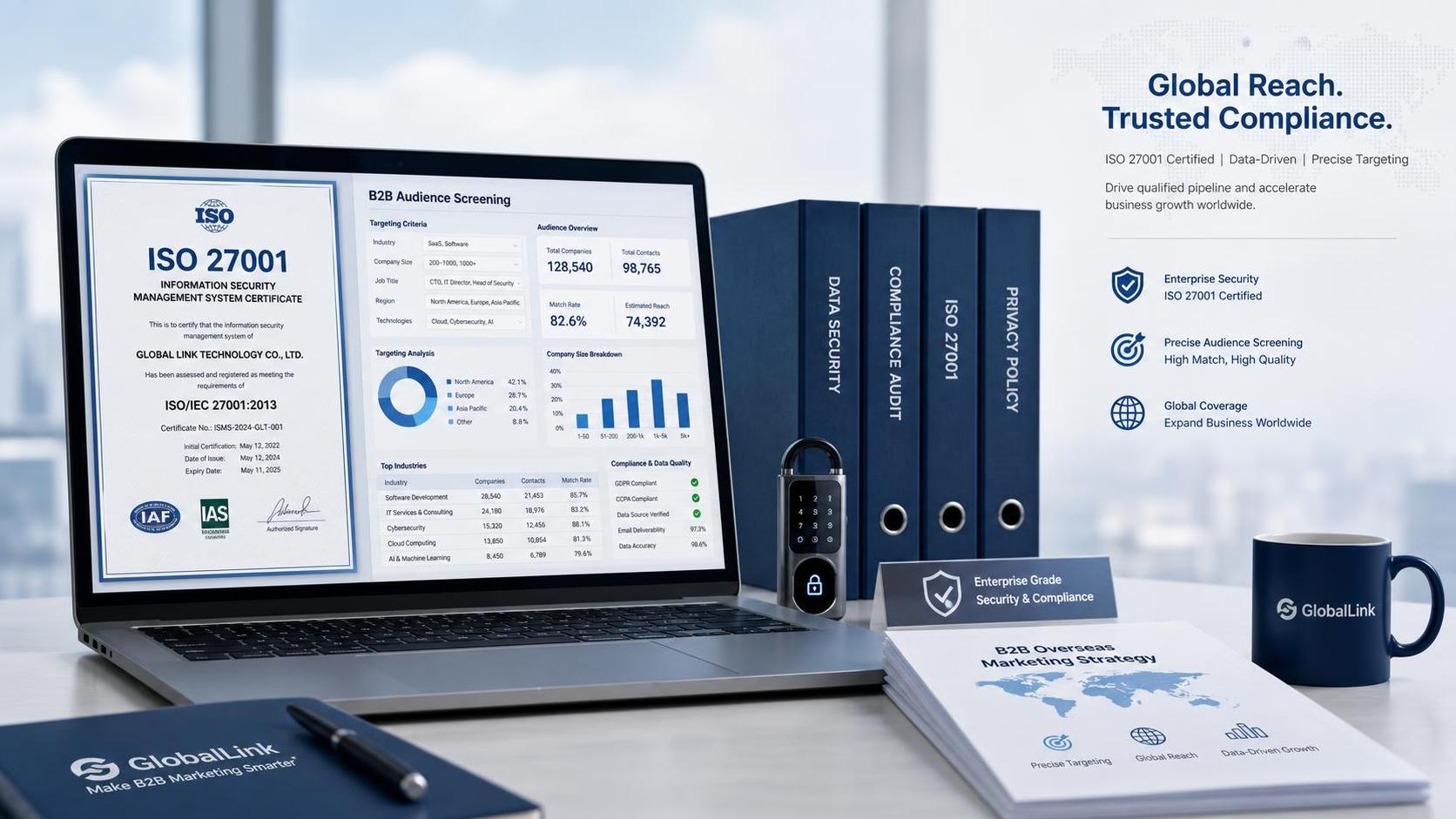
On August 12, 2026, LinkedIn issued a system notice to enterprise accounts in the Asia-Pacific region stating that mainland China-registered B2B SaaS advertisers must now submit a valid ISO 27001 information security management certification screenshot and pass manual review to use advanced audience segmentation for overseas decision-maker outreach. For teams relying on filters such as company size, industry, and technology stack, this is not just a platform setting change; it directly touches campaign access, compliance preparation, and the way overseas B2B demand generation may be executed from China-based entities.
What the new LinkedIn rule confirms
Based on the information provided, the rule took effect on August 12, 2026, when LinkedIn pushed the notice to enterprise accounts in the Asia-Pacific market.
The requirement applies to B2B SaaS advertisers whose place of registration is mainland China.
If those advertisers want to use advanced targeting combinations such as company size, industry, and technology stack to reach overseas procurement decision-makers, they must upload a valid ISO 27001 certification screenshot and complete manual review.
If they do not complete that process, LinkedIn will only make basic geographic and job-title targeting available to them.
Where the operational impact is likely to appear
Demand generation teams targeting overseas buyers
From an industry perspective, the most immediate impact is likely to fall on in-house marketing and growth teams at mainland China-registered B2B SaaS companies. Their exposure comes from the fact that advanced audience layering is often tied to account selection, campaign refinement, and decision-maker outreach. What deserves closer attention is whether current campaign structures depend on filters beyond geography and job title, because the effective loss of those filters could narrow precision in audience selection.
Agencies and service providers managing paid acquisition
Analysis shows that agencies, media buying partners, and campaign operations service providers may also be affected because their delivery scope often includes account setup, documentation coordination, and targeting execution. The practical issue is not only whether a campaign can launch, but whether the required certification materials can be collected, submitted, and cleared in time for planned activity.
Sales and commercial teams tied to account-based outreach
For commercial teams working with overseas pipeline generation, the change may matter where LinkedIn targeting is used to support account-based marketing or sector-specific outreach. Observably, if advanced segmentation becomes unavailable pending review, the impact may appear in lead qualification logic, audience prioritization, and coordination between sales and marketing on target account lists.
Procurement-side stakeholders and overseas prospects
The notice is directed at advertisers, but procurement-side stakeholders may feel an indirect effect if supplier outreach becomes less segmented or slower to launch. This does not confirm any change in buyer behavior, but it does suggest that communication pathways between China-based B2B SaaS vendors and overseas decision-makers could become more documentation-dependent at the platform level.
What companies should monitor now
Whether current campaign access depends on advanced filters
Companies should first distinguish between basic and advanced targeting use cases inside their existing LinkedIn advertising workflow. The core practical question is whether overseas acquisition plans rely on combinations such as company size, industry, and technology stack, because that determines how exposed the business is to the new review gate.
The readiness and validity of certification materials
What deserves closer attention is the availability of a valid ISO 27001 certification screenshot that can be submitted for manual review. The rule, as provided, refers specifically to the upload of valid certification material and approval through human review, so documentation readiness becomes an immediate operational issue rather than a general compliance topic.
The gap between the rule text and campaign timing
Analysis shows that businesses should separate the existence of the requirement from the timing of actual campaign execution. Even where a company has the relevant certification, the operational question is whether review timing affects launch schedules, budget pacing, or coordination with regional sales activity. The input does not provide review timeframes, so this remains a point for ongoing verification rather than a confirmed outcome.
Whether LinkedIn clarifies the scope further
Companies and practitioners should also watch for any later clarification on scope, interpretation, or implementation details. The current information confirms the requirement for mainland China-registered B2B SaaS advertisers seeking advanced targeting, but it does not establish broader platform policy beyond that stated group and use case.
Why this matters beyond a settings change
Observably, this update can be read as more than a minor feature restriction because it links access to higher-value B2B audience segmentation with formal information security documentation. That does not, by itself, prove a wider policy shift across all ad products or all advertiser categories. However, it does signal that for the affected group, platform-level targeting access is now tied more directly to verifiable compliance material.
It is more appropriate to understand this as a concrete operational change with broader strategic implications still requiring observation. The rule is already specific in its access conditions, but the larger industry meaning will depend on whether the requirement remains limited to the stated advertiser segment or becomes part of a wider pattern in how B2B advertising permissions are administered.
How to frame the development at this stage
At this stage, the most balanced reading is that LinkedIn has introduced a clear compliance threshold for a specific advertiser group seeking advanced overseas B2B targeting. The immediate significance lies in campaign eligibility, documentation readiness, and internal coordination between marketing, compliance, and commercial teams.
It would be premature to treat the notice as a final indicator of wider market restructuring or a confirmed long-term platform direction. For now, it is better understood as an actionable rule change with potential strategic significance, one that deserves close follow-up as implementation details and any later clarifications emerge.
Basis of this report and what still needs verification
This article is based on the user-provided news title, event date, and event summary. For developments of this type, commonly relevant source categories may include official platform notices, company announcements, industry association updates, authoritative media coverage, and documentation from standards-related bodies.
A specific official source link was not provided in the input, so further verification is still needed. Continued attention should focus on whether LinkedIn issues additional wording on scope, review handling, or any expansion or refinement of the rule beyond the advertiser category and targeting functions described above.