MICAPP
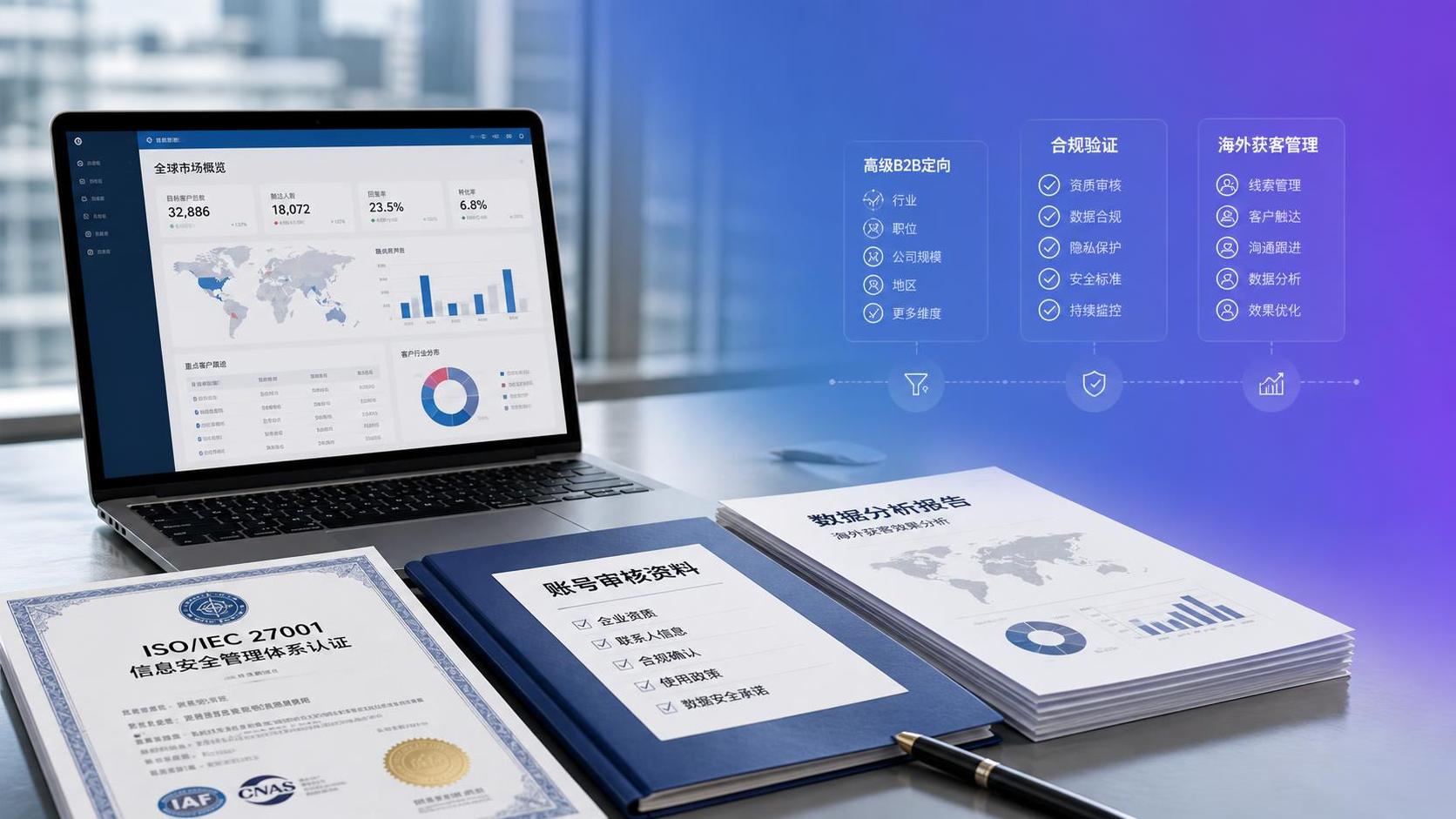
On August 9, 2026, LinkedIn put a revised B2B advertising access rule into effect for China-registered SaaS companies. The change matters because access to advanced audience filters such as job seniority, company size, and purchasing function is now tied to ISO/IEC 27001 certification and account-level qualification verification, which directly affects how export-oriented service providers, marketing teams, and sales operations reach overseas decision-makers through the platform.
What the rule now requires
According to the information provided, LinkedIn began enforcing the updated B2B advertising entry rule on August 9, 2026. For SaaS companies registered in China, including providers of website-building, CRM, and email management services for foreign trade, use of high-precision B2B targeting options requires completion of ISO/IEC 27001 information security management system certification and qualification verification within the advertising account.
The provided information also states that companies without that certification will be limited to basic geographic and industry targeting. As described in the event summary, this reduces efficiency in reaching key decision-makers such as overseas procurement directors and supply chain vice presidents.
The same source material states that Meikepu completed the certification in Q2 2026 and has opened a whitelist-sharing channel for clients to support joint credential endorsement.
Where the operational pressure is likely to appear
Overseas customer acquisition for SaaS exporters
From an industry perspective, the most immediate effect is on China-registered SaaS providers that rely on LinkedIn for outbound demand generation. If advanced targeting is tied to certification status, the practical impact falls on campaign planning, audience segmentation, and lead qualification. What deserves closer attention is whether marketing execution can still align with account-based outreach when only basic region or industry filters remain available.
Sales and procurement-facing outreach workflows
For teams trying to reach procurement heads, supply chain leaders, or other senior buying roles, the rule change may affect the handoff between advertising, lead screening, and sales follow-up. Analysis shows that the issue is not only media access, but also whether compliance status becomes a gating factor in approaching high-value B2B contacts through platform tools that were previously treated as a marketing capability rather than a credential-dependent function.
Certification and compliance service demand
Observably, the rule also puts more weight on certification readiness and supporting documentation. For companies that had viewed ISO/IEC 27001 mainly as an internal governance or tender-support asset, the event suggests that certification may now influence a customer acquisition channel as well. That places more attention on audit preparation, qualification review, and account verification materials linked to advertising access.
Clients evaluating service providers
Buyers of external marketing, CRM, website, or email management services may also need to look more closely at vendor qualification status. Where a service provider's delivery model depends on LinkedIn's advanced B2B targeting, the provider's certification position could affect campaign precision, account strategy, and expected lead reach. In that sense, procurement review may extend beyond service scope and pricing to include whether required compliance credentials are already in place.
What companies should watch in practice
Certification status and verification readiness
Companies affected by the rule should first check whether their current ISO/IEC 27001 status is complete and whether the advertising account has finished the required qualification verification. The information provided confirms these two elements as conditions for advanced targeting access, so they are the most immediate operational checkpoints.
Changes in targeting assumptions inside campaign plans
Teams using LinkedIn for outbound B2B acquisition should review whether existing campaign structures assume continued access to job seniority, company size, and purchasing-function targeting. Analysis shows that if those assumptions remain embedded in media plans, forecast accuracy and audience design may need to be reassessed under the new rule.
Vendor documents and shared qualification support
Where service delivery involves agencies, technology vendors, or joint account operations, it is worth watching how qualification documents are presented and reviewed. The provided information notes that Meikepu has opened a whitelist-sharing channel for joint endorsement with clients, which suggests that credential-sharing arrangements may become relevant in practice, even though the detailed execution standard has not been provided here.
Further wording and implementation signals
Because the input does not include detailed enforcement guidance beyond the rule itself, companies should continue to watch for later clarification on verification scope, supporting materials, and any changes in platform wording. It would be premature to treat every operational consequence as settled, but the access condition itself should be understood as already in force based on the provided timeline.
How this should be read at this stage
Analysis shows that this development is best understood primarily as a live compliance gate rather than a broad policy discussion. The rule is not framed here as a future proposal; it is described as having taken effect on August 9, 2026. At the same time, the market still needs to observe how strictly the verification process is applied, how companies document qualification status in practice, and whether client-side procurement or vendor review processes begin to reference this requirement more explicitly.
From an industry perspective, the significance lies in the shift of ISO/IEC 27001 from a background governance credential to a possible condition for preserving precision in B2B customer acquisition. That does not automatically determine business outcomes, but it does change the compliance weight attached to one important route to overseas decision-makers.
A rule change with immediate but still evolving implications
At this point, it is more appropriate to understand the event as an implemented platform rule with operational implications for China-registered B2B SaaS companies, especially those serving foreign-trade workflows. The confirmed change is narrow but concrete: advanced targeting access now depends on certification and account verification. The broader commercial effect, including how buyers, vendors, and campaign operators adjust, still requires continued observation rather than fixed conclusions.
Basis of this article and points that still need verification
This article is generated from the user-provided news title, event date, and event summary. For events of this kind, relevant source categories commonly include official platform notices, regulatory releases, trade or customs authority information, industry association updates, standards organization documents, and reporting by authoritative media. No specific official source link was provided in the input, so the underlying official link and any later clarifications still need to be verified on an ongoing basis. Items that remain worth watching include detailed implementation wording, certification review standards, account verification practice, procurement document changes, industry feedback, and how affected companies carry out execution after the rule has taken effect.