MICAPP
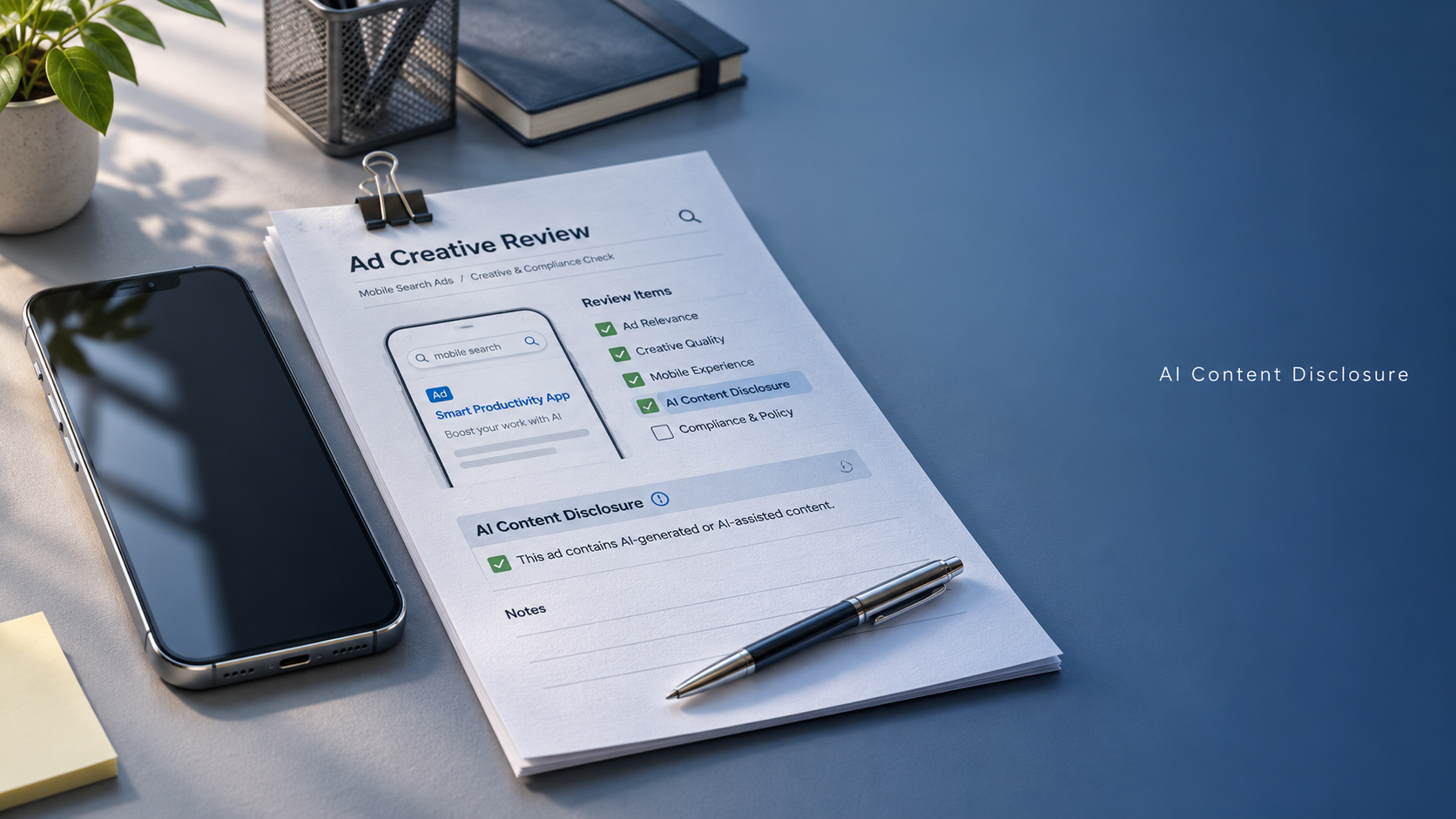
Google search advertisers face a new disclosure consideration as AI content labels appear below sponsored results on mobile search. The event date is not specified in the date field, although the supplied summary states that the labels began appearing on November 9, 2026. The development is relevant to advertisers and the businesses that prepare their creative materials because it links the use of AI-generated or AI-edited content to a visible advertising transparency measure.
Labels appear beneath mobile search ads
According to the supplied summary, Google began displaying AI content disclosure labels in the sponsored results area of mobile search on November 9, 2026. The labels appear directly below ads and identify advertising materials generated or edited using AI.
The summary describes the change as part of Google's advertising transparency policy, which requires advertisers to disclose AI-generated content. It states that the change affects all customers advertising on Google Search.
Where disclosure may affect advertising work
Advertisers reviewing creative materials
From an industry perspective, businesses advertising on Google Search may need to consider whether AI was used to generate or edit the materials in their campaigns. This could affect how they review content before submission and how they identify materials that may require disclosure. The supplied information does not specify the precise criteria or process for applying a label.
Teams and suppliers producing ads
Analysis suggests that creative teams and external suppliers may need clearer communication with advertisers about whether AI was used in preparing an asset. Advertising clients may also wish to assess whether their existing approval and delivery processes provide enough information to support disclosure decisions. The input does not establish any new documentation or contractual requirement.
Campaign managers checking live results
Campaign managers may need to pay attention to how disclosures appear alongside mobile search ads and whether the visible presentation raises questions for clients. Any effect on audience response or campaign performance remains uncertain; the supplied information provides no results on either point.
Questions to address before and after publication
Identify relevant AI use
Businesses can review how they identify generated or edited advertising materials and ask the people preparing those materials to communicate relevant AI use. This is a practical precaution, not a confirmed procedural requirement in the supplied summary.
Verify the disclosure criteria
Advertisers should check Google's current official guidance for the scope of covered content, the distinction between generation and editing, and any steps required to disclose an asset. The supplied information does not explain these details.
Review approval and delivery arrangements
Advertisers and their creative suppliers may wish to review who checks AI use and communicates it during asset preparation and delivery. They can also assess whether their existing records are sufficient to support those checks; the input does not prescribe a record format.
Monitor the live presentation
Once campaigns are running, advertisers may choose to inspect relevant mobile search results and follow further guidance about label presentation. The supplied summary does not explain how consistently labels appear or how any display issues are handled.
A visible change with details still to verify
Our assessment is that the supplied account describes a visible implementation of a disclosure label, while leaving the operational details open to verification. In particular, the date field says the event time is unspecified even though the summary gives November 9, 2026. Further official information about timing, covered materials and disclosure procedures would help businesses assess how to apply the policy in practice.
Planning around the disclosure
For advertisers, the development is best treated as a reported change to monitor and verify while reviewing how AI use is identified in search advertising materials. Its practical effect on creative workflows and market response remains a matter for observation.
Basis for this report and further verification
This article is based on the user-provided news title, event date field and event summary. No specific official source link was provided in the input, so the details require ongoing verification against Google announcements and policy guidance. Further attention should focus on the applicable criteria, implementation details, advertiser practices and industry feedback.