MICAPP
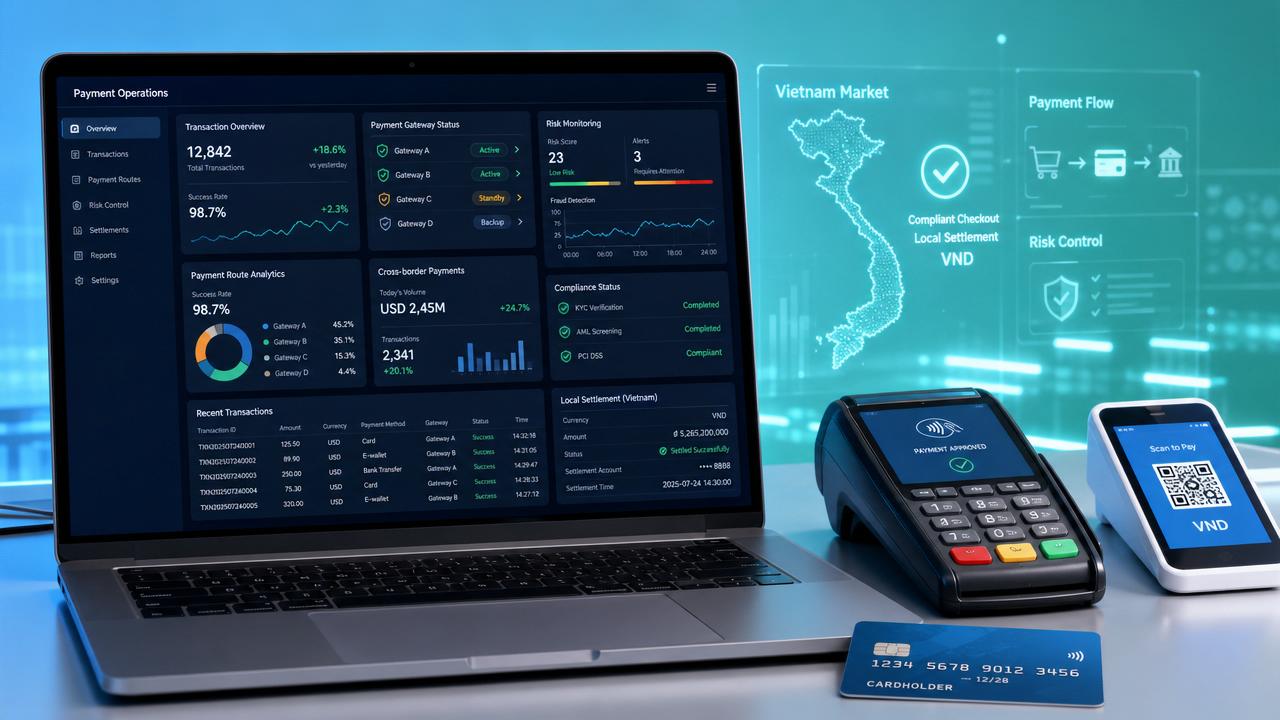
On June 8, 2026, the State Bank of Vietnam (SBV) put into effect a new requirement for cross-border independent e-commerce sites that offer local VND settlement to consumers in Vietnam: the connected payment gateway must hold an SBV-issued Cross-Border Electronic Payment Service License. With unlicensed gateways set to lose access to VND channels from July 1, this is immediately relevant to merchants selling into Vietnam, payment service providers, and teams responsible for checkout conversion and local payment operations.
What the new requirement confirms
According to the information provided, the new rule took effect on June 8, 2026. It applies to cross-border independent sites that provide local VND settlement services to consumers in Vietnam.
The key compliance condition is that the payment gateway connected to these sites must hold the Cross-Border Electronic Payment Service License issued by SBV. The same information states that unlicensed gateways will be forcibly disconnected from VND channels starting on July 1.
The input also indicates that this change may affect the conversion performance of more than 30% of Chinese sellers operating in Vietnam. In addition, it states that Makep has completed direct API integration with a licensed local payment partner and supports compliant VND acquiring.
Where the pressure is likely to appear first
Checkout-dependent cross-border sellers
From an industry perspective, sellers running independent sites into Vietnam are the most directly exposed because the rule is tied to whether VND settlement can continue at checkout. If a seller relies on a gateway that does not hold the required license, the immediate concern is disruption to local payment acceptance and potential pressure on conversion.
Payment gateways and payment orchestration partners
Payment providers serving cross-border merchants may face the most visible operational adjustment. Analysis shows that licensing status is no longer a background compliance issue; it becomes a core factor in whether VND processing remains available after July 1. For this group, the impact centers on gateway availability, partner selection, and integration readiness.
Service providers supporting local market expansion
Teams involved in market entry, store operations, and payment implementation may also be affected because payment continuity is closely linked to the broader customer journey. What deserves closer attention is whether current merchant setups depend on unlicensed routing for VND settlement, and how quickly those setups can be switched without affecting ongoing sales activity.
What companies should review now
Verify gateway licensing status
The first practical issue is whether the gateway currently used for VND settlement holds the relevant SBV license. This is a factual checkpoint rather than a strategic discussion, because the cutoff date for unlicensed VND channels has already been specified in the input.
Separate policy wording from technical readiness
Analysis shows that a regulatory requirement and actual business continuity are not the same thing. Even where a compliant route exists, companies still need to confirm whether direct connection, API switching, and settlement flow adjustments are already in place for live transactions.
Prioritize Vietnam-facing conversion risk
For teams with active sales into Vietnam, the issue is not only compliance but also checkout performance. Since the provided information links the rule to conversion exposure for a substantial share of Chinese sellers in the market, businesses should pay close attention to payment success paths, fallback arrangements, and customer-facing communication if settlement options change.
Track follow-up clarification and implementation signals
Observably, this development should also be watched for any further official clarification or implementation detail. Companies should distinguish between the confirmed rule already described in the input and any later operational interpretation that may affect onboarding, documentation, or partner coordination.
How this should be understood at this stage
Analysis shows that this is more than a routine compliance update for merchants selling into Vietnam. The rule directly links regulatory status to local-currency settlement capability, which makes payment infrastructure a frontline operational issue rather than a back-office one.
At the same time, it is more appropriate to understand this as an active implementation-stage development than as a fully closed market conclusion. The effective date is already in place, and the disconnection date for unlicensed gateways is clearly stated, but the broader industry response still depends on how individual merchants, gateways, and service partners adjust in practice.
Why the development matters beyond the headline
The industry significance of this update lies in its immediacy and specificity: access to VND settlement is now explicitly tied to licensed payment connectivity for cross-border independent sites serving Vietnam. For businesses already operating in the market, this is best understood as a near-term operational compliance issue with direct checkout implications, while also signaling a longer-term need to evaluate local payment structures more carefully.
A neutral reading is that the rule has already produced a clear compliance threshold, but its full commercial impact still needs continued observation at the merchant and service-provider level.
Basis of this article
This article is based on the user-provided news title, event date, and event summary. The specific official source link was not provided in the input, so further verification is still needed against source types commonly relevant to this kind of development, such as official regulator notices, company announcements, industry association updates, authoritative media coverage, and formal payment-related compliance documents.
Areas that merit continued monitoring include any additional official clarification, the practical scope of enforcement after July 1, and how merchants and payment partners implement compliant VND settlement arrangements.