MICAPP
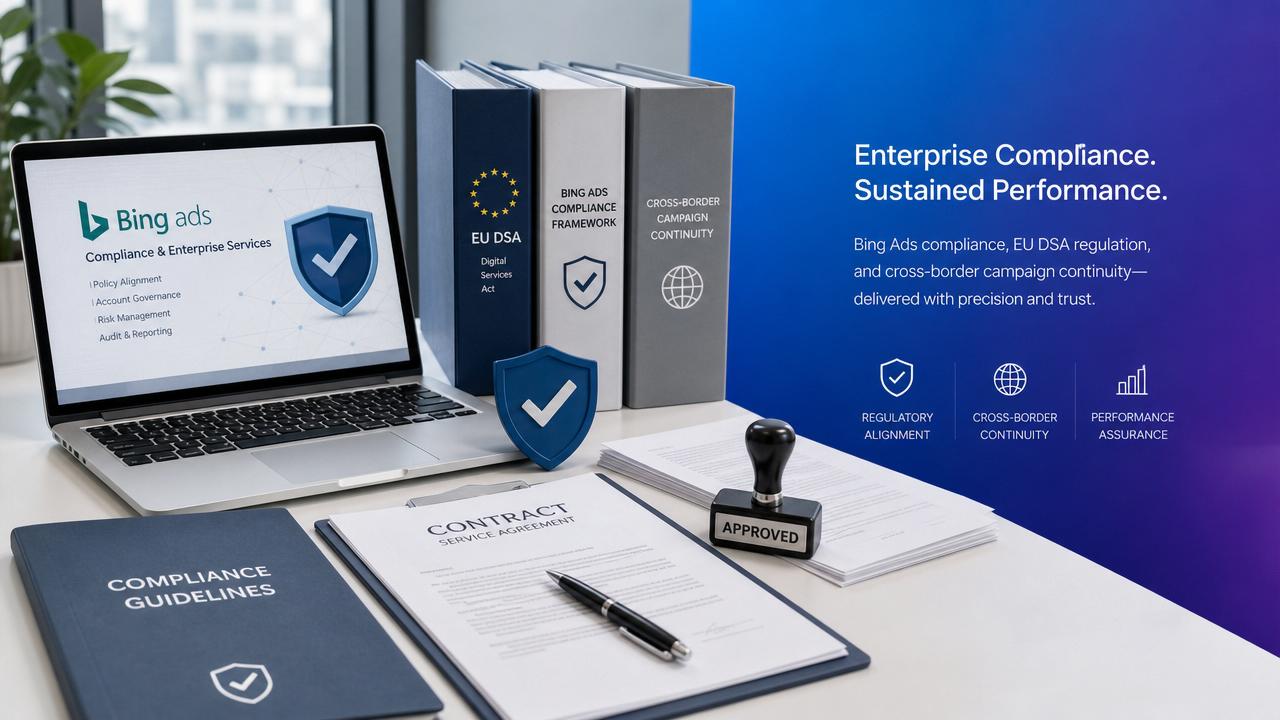
On June 30, 2026, the EU Digital Services Act (DSA) was extended to the Bing advertising ecosystem, bringing a new compliance requirement for non-EU advertisers that place ads within the EU market. The immediate point of attention is not only the legal deadline itself, but also the operational impact on account continuity, campaign delivery, and cross-border customer acquisition for advertisers, agencies, and SaaS website businesses serving EU audiences.
What the new requirement now covers
According to the provided event information, Bing Ads has been brought within the scope of DSA oversight. All non-EU entities advertising in the EU, including Chinese SaaS website-building customers, are required to appoint and publicly disclose a local legal representative in the EU by June 30, 2026.
The same information states that non-compliant advertisers may face suspension of their advertising accounts and penalties of up to 6% of global revenue. It also states that a cloud platform has already integrated DSA representative registration guidance and a whitelist database of agency service providers, with support for completing filing within 72 hours.
Where the impact is likely to be felt first
Cross-border advertisers face an account access risk
From an industry perspective, the most direct effect is on non-EU businesses that rely on Bing Ads to reach users in the EU. The impact is likely to appear first in compliance preparation, account eligibility, and campaign continuity, because the requirement is tied to whether an advertiser can keep operating without interruption.
Agencies and service operators may need to recheck client readiness
For agencies, ad operators, and third-party service teams managing EU-bound campaigns, the issue is not limited to media buying. Analysis shows that onboarding documents, client qualification checks, and representative disclosure processes may become a more visible part of account management. What deserves closer attention is whether service workflows are ready to identify which clients fall within the non-EU advertiser category.
SaaS website businesses need to connect compliance with customer acquisition
For SaaS website businesses targeting EU demand, the development is relevant because advertising is often tied to lead generation and product growth. Observably, the practical issue is less about policy interpretation in the abstract and more about whether traffic acquisition plans, launch schedules, and customer communications can continue without disruption if registration is incomplete.
What companies should watch now
Separate the legal requirement from platform execution
Analysis shows that companies should focus on the difference between the policy requirement itself and how it is enforced in actual platform operations. The confirmed fact is the June 30, 2026 deadline and the requirement to appoint and disclose an EU legal representative; the next practical question is how each advertiser organizes its documentation and disclosure in time.
Check whether EU-targeted campaigns create exposure
Businesses should review whether they are non-EU entities placing ads into the EU market through Bing Ads. This matters because the rule is tied to advertising activity in the EU, which means marketing teams, regional sales teams, and external ad partners may all need to confirm whether existing campaigns fall within scope.
Prepare documents and service partners early
What deserves closer attention is execution timing. The provided information indicates that registration guidance and a whitelist of agency service providers are already available through one platform, with support for filing in 72 hours. For companies, that suggests the operational window may be manageable, but only if document preparation, internal approval, and vendor coordination are handled before the deadline pressure peaks.
Watch for further clarification in official wording
Observably, this is also the kind of compliance update where wording, disclosure format, and platform-side implementation details can shape actual workload. Companies should continue monitoring whether additional official clarification affects filing procedures, disclosure expectations, or account review timing.
How this development is best understood
Analysis shows that this is more than a short-term platform rule adjustment, because it links advertising access with formal legal representation inside the EU. At the same time, it should not be overstated as a fully settled endpoint for all market participants. It is more appropriate to understand this as a clear compliance signal with immediate operational consequences, while some implementation details may still require continued observation.
From an industry perspective, the significance lies in how regulatory obligations are moving closer to day-to-day ad operations. That matters for businesses whose EU market strategy depends on stable traffic channels rather than one-off campaigns.
A practical reading of the June 30 deadline
The industry meaning of this update is relatively clear: non-EU advertisers using Bing Ads for EU market access can no longer treat legal compliance as separate from campaign operations. A neutral reading is that the deadline creates a concrete checkpoint rather than a theoretical policy discussion. For now, it is more appropriate to understand this as an actionable compliance requirement with both legal and account-level implications, while continuing to watch how implementation evolves in practice.
Basis of this article and what still needs verification
This article is based on the user-provided news title, event date, and event summary. The specific official source link was not provided in the input, so it still needs continued verification against materials such as official announcements, company statements, industry association updates, authoritative media coverage, and related compliance documents where available.
If further observation is needed, the key follow-up areas include whether any additional official wording changes the practical filing process, whether platform-side enforcement details become more explicit, and how disclosure requirements are presented to advertisers during account compliance checks.