MICAPP
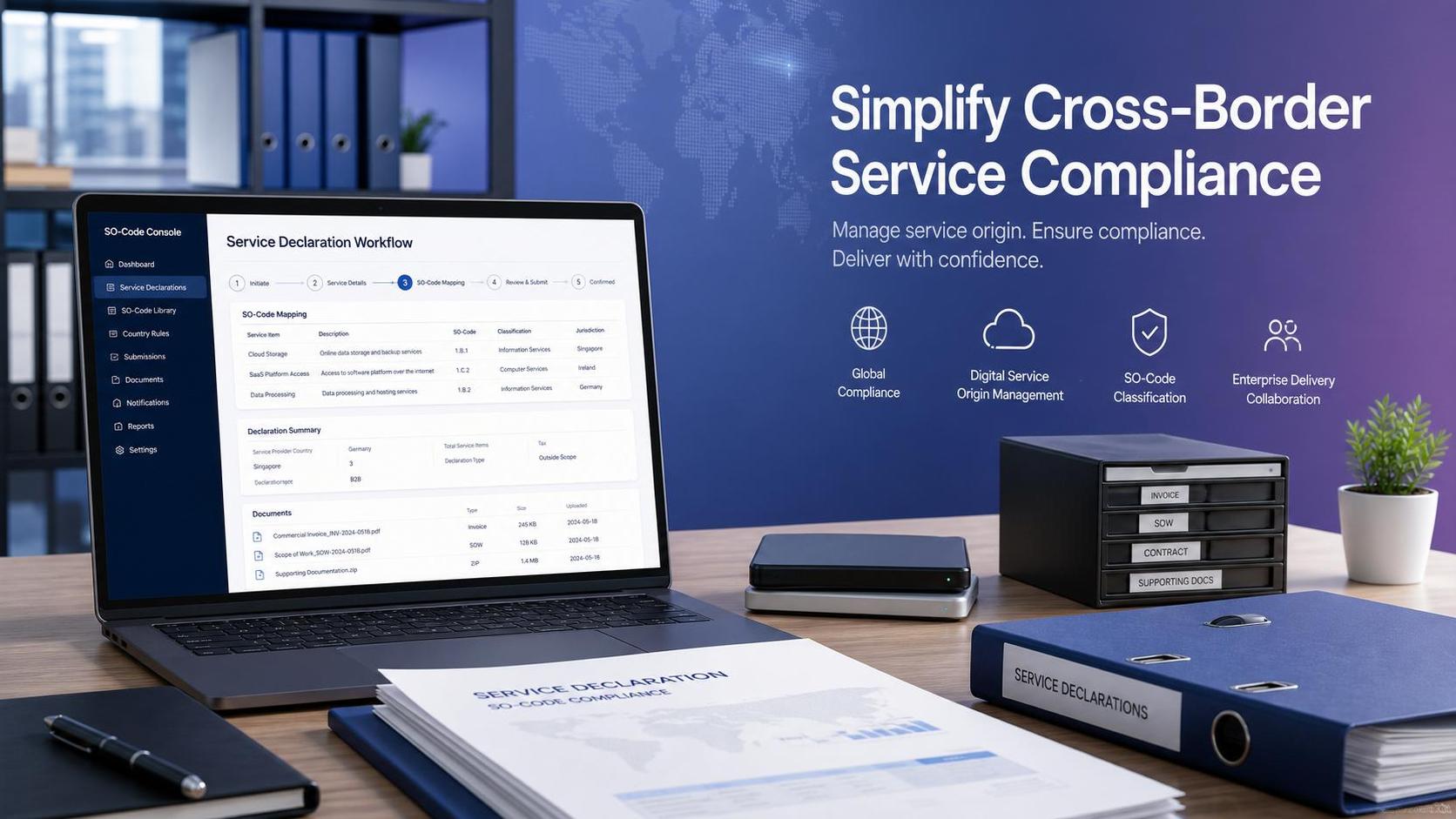
On June 23, 2026, U.S. Customs and Border Protection (CBP) launched the Digital Service Origin Statement (DSOS) pilot, bringing SaaS-based digital services into an origin-management framework for the first time based on the information provided here. For Chinese providers serving enterprise clients with standalone website building, advertising delivery, translation, and similar SaaS services, the immediate point of attention is the new filing requirement and the need to obtain an SO-Code, because this code is described as a required document for overseas customers handling digital service tariff declarations and seeking trade agreement benefits.
What the DSOS pilot formally introduces
The confirmed information shows that CBP began the DSOS pilot on June 23, 2026. The pilot places SaaS digital services within an origin declaration context. According to the provided summary, Chinese service providers that offer services such as independent site building, advertising placement, and translation for Chinese enterprise customers must complete export filing on a CBP-designated platform and apply for a service origin code, or SO-Code.
The same summary states that the SO-Code serves as a necessary credential for overseas customers when declaring import tariffs on digital services and when seeking eligibility for trade agreement preferences. No further procedural detail, implementation standard, or supporting document list was provided in the input.
Where the impact may appear first
Cross-border digital service providers face a new compliance touchpoint
From an industry perspective, the most direct impact is on Chinese SaaS providers involved in export-facing service delivery. This is because the filing step and SO-Code application are tied to whether overseas customers can complete downstream declaration processes. What deserves closer attention is that compliance is no longer limited to the service contract itself; documentation linked to origin may now become part of delivery readiness.
Overseas buyers may depend more heavily on supplier documentation
Analysis shows that overseas customers could be affected at the procurement and customs-declaration stage, since the provided information describes the SO-Code as a necessary credential for tariff declaration and trade agreement treatment. In practical terms, this may make supplier onboarding, document collection, and service confirmation more important in cross-border transactions involving digital services.
Operational teams may see changes in handoff and timing
Observably, the effect may also reach account management, delivery coordination, and contract execution. If origin-related filing becomes a precondition for a customer’s later declaration process, service providers may need to pay closer attention to when filing is completed, when the SO-Code is available, and how that information is communicated to clients during project delivery.
What companies should watch now
Track how CBP defines the pilot in practice
What deserves closer attention is the difference between the pilot announcement and day-to-day implementation. The input confirms the launch of the pilot and the filing requirement, but it does not provide more detailed operating rules. Companies should therefore closely monitor whether CBP issues clarifications on scope, filing procedures, or supporting materials.
Review whether current service lines fall within the stated categories
The provided summary explicitly mentions standalone website building, advertising placement, and translation. For companies offering multiple SaaS-linked services, the immediate practical question is whether existing offerings match the categories described in the pilot and whether internal teams have a clear method for identifying affected orders and clients.
Prepare client communication around the SO-Code requirement
Analysis shows that this development is not only a regulatory matter but also a customer-interface issue. Since the SO-Code is described as necessary for overseas customers’ tariff declaration and trade agreement treatment, service providers may need to align sales, delivery, and support teams on how to explain timing, responsibility, and document handling to clients.
Check documentation readiness before delivery pressure builds
From an industry perspective, companies should pay attention to document flow and fulfillment sequencing. Even without additional rule detail in the input, it is reasonable to distinguish between a policy signal and actual operational readiness: filing, code application, and customer handoff may become a linked process that needs advance preparation.
Why this looks like more than a one-off procedural update
Observably, this development is significant less because of volume data or market size—which were not provided here—and more because it introduces an origin-management concept into SaaS-related digital services. Analysis shows that the event can be understood as an early regulatory signal that cross-border digital service transactions may face more formal documentation expectations when linked to tariff declaration and trade agreement treatment.
At the same time, it is more appropriate to understand this as a development that still requires observation rather than as a fully settled industry outcome. The input confirms the pilot launch and the filing requirement, but it does not establish how broad the long-term scope will be, how consistently the rule will be applied, or whether implementation details may change.
How to read this development at this stage
The key industry meaning of this update is that a border and trade compliance lens is beginning to touch service categories that many companies have treated mainly as commercial or operational matters. For companies involved in cross-border website building, ad delivery, translation, and related SaaS services, the current message is not to overstate the outcome, but also not to treat the pilot as a minor formality.
It is more appropriate to understand this event as a near-term compliance change with longer-term signaling value. The immediate task is to watch filing and code requirements closely, while the broader industry question is whether origin-based treatment of digital services will become more standardized over time.
Basis of this article and points for continued verification
This article is based on the user-provided news title, event date, and event summary. In coverage of developments like this, commonly relevant source types may include official notices, company statements, industry association releases, authoritative media reports, and documents issued by standards or regulatory bodies.
No specific official source link was provided in the input, so the exact official documentation still requires ongoing verification. The main follow-up points to watch are whether CBP releases more detailed operating guidance, whether the stated service categories are further clarified, and how the SO-Code requirement is applied in actual cross-border service transactions.