MICAPP
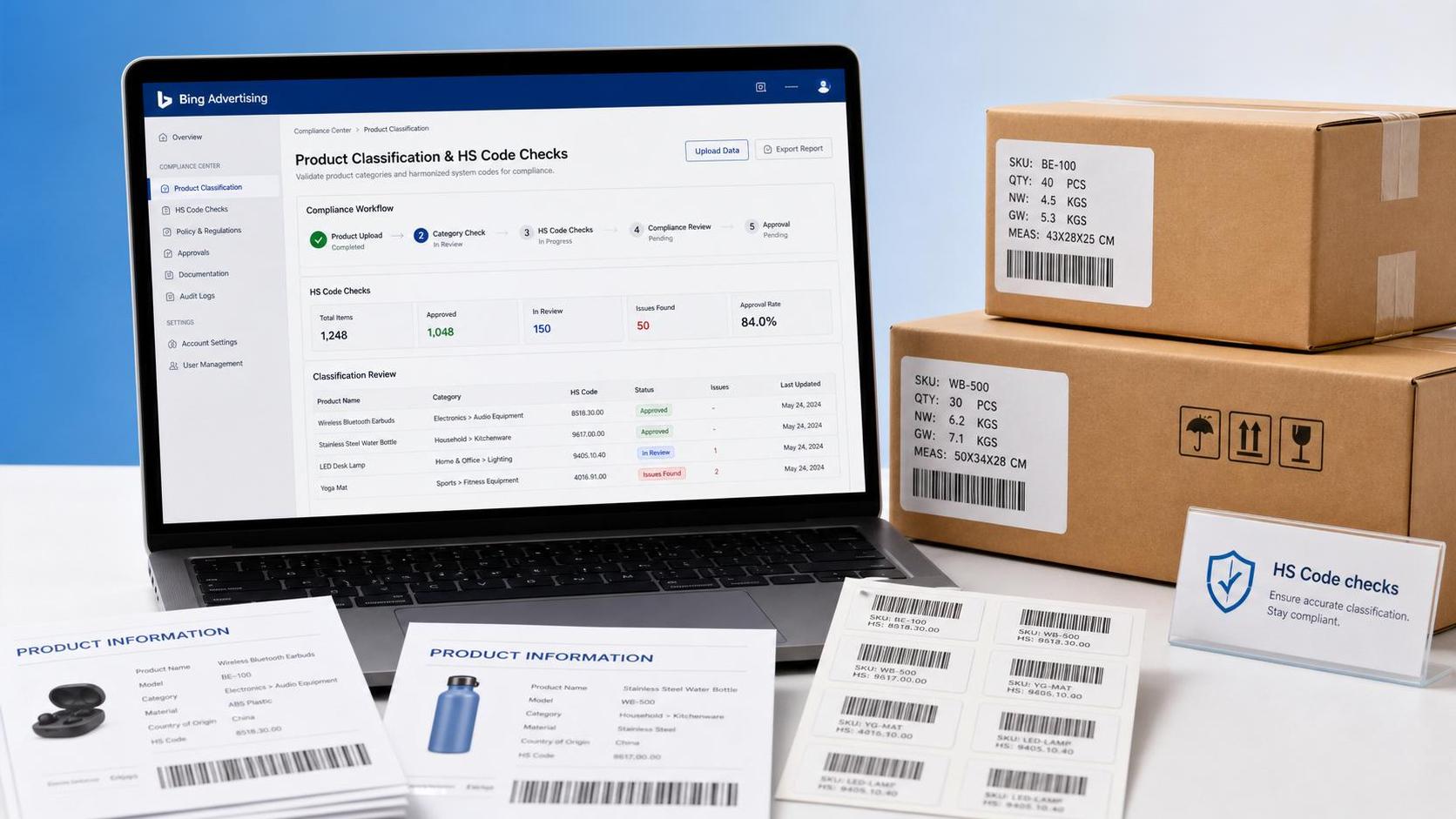
On July 10, 2026, Microsoft introduced a new compliance-oriented update to Bing Advertising with the release of HS Code intelligent validation tool v2.3. The update brings real-time warning capability for customs code mismatches on product landing pages, making it relevant for cross-border sellers, supply chain service providers, compliance teams, and advertising operators working across multiple markets. The reason this deserves industry attention is that customs classification is being connected more directly to ad delivery workflows, rather than remaining only a downstream trade documentation issue.
What the update officially includes
According to the provided event information, Bing Advertising launched version 2.3 of its HS Code intelligent matching and diagnostic tool on July 10, 2026. The tool can connect with customs databases from 21 countries, including USCBP, EU TARIC, and UK HMRC.
The stated function is to automatically compare the consistency between product categories shown on advertising landing pages and the corresponding HS codes. For higher-risk mismatches, including cases where the classification deviation exceeds two code digits, the system can trigger a red warning. The provided information also states that Maikepu's Bing advertising management module has integrated this capability.
Why this matters across the operating chain
For cross-border merchants running product ads
From an industry perspective, these advertisers may be affected first because product description, category labeling, and market-facing claims on landing pages are now more closely linked to customs coding consistency checks. The impact is likely to appear in campaign review, product page preparation, and internal coordination between marketing and compliance functions. What deserves closer attention is whether product category wording used for conversion purposes remains aligned with the HS code logic used for trade declaration.
For manufacturers and trading companies serving multiple destinations
Analysis shows that businesses shipping similar goods into different markets may need to pay closer attention to market-specific customs references when using one set of landing page materials across regions. The operational pressure is not only on classification itself, but also on how product attributes are presented in public-facing content. A mismatch warning may draw attention to gaps between internal trade documentation and external commercial communication.
For supply chain and service providers
Service providers involved in customs support, catalog management, feed operations, or ad account execution may see stronger demand for upstream data consistency. Their exposure lies in workflow handoffs: product data may originate from suppliers, be adapted by marketplaces or marketing teams, and then be checked against customs databases in the ad system. The immediate concern is whether existing processes can identify and correct category-to-code discrepancies before they are flagged in campaign operations.
Practical points companies should watch now
Focus on category descriptions used in landing pages
Businesses should closely monitor whether the category language on landing pages accurately reflects the classification logic already used in customs-related records. The update specifically connects ad content presentation with HS code consistency, so the issue is no longer limited to internal filing or declaration stages.
Track market scope and database relevance
The confirmed information mentions connectivity with customs databases from 21 countries, including the United States, the European Union, and the United Kingdom. Companies active in these destinations should pay particular attention to whether product pages prepared for one market are being reused elsewhere without adequate classification review.
Separate system alerts from final compliance decisions
Observably, a system warning is not the same as a final customs ruling. What deserves closer attention is how businesses interpret red alerts operationally: as a trigger for review, escalation, and documentation checks, rather than as a standalone legal conclusion. This distinction matters for internal communication between ad teams, trade compliance staff, and external service partners.
Prepare for tighter coordination across teams
Where advertising, product, and trade documentation are managed by different teams, the update may expose delays or inconsistencies in internal approval flows. Companies should pay attention to product records, supporting documents, and market-specific explanations that may be needed when a flagged mismatch affects campaign launch timing or account operations.
How this should be read at this stage
Analysis shows that this update is better understood as a compliance signal entering the advertising workflow, rather than as a complete change in trade rules by itself. The confirmed facts indicate a stronger technical connection between product promotion and customs classification checks. However, the broader business effect will still depend on how consistently advertisers, merchants, and service providers adapt their internal data and review processes.
It is more appropriate to understand this as both a short-term operational change and a longer-term indicator. In the short term, it may affect campaign preparation and exception handling for product pages. In the longer term, it suggests that advertising platforms may continue to raise the level of structured compliance checks tied to market access and product representation.
A measured takeaway for the market
The immediate significance of the Bing Advertising v2.3 update lies in bringing HS code consistency checks closer to the front end of international digital marketing. For companies involved in cross-border product promotion, the development is less about headline impact and more about whether their product data, market messaging, and classification records can withstand automated comparison.
At present, this is best understood as a meaningful operational development that warrants continued observation. It does not by itself confirm broader enforcement outcomes, but it does indicate that compliance-related product classification is becoming more visible inside advertising systems.
Basis of this article and follow-up verification
This article is based on the user-provided news title, event date, and event summary. The analysis has been limited to the confirmed information provided: the July 10, 2026 release date, the launch of Bing Advertising HS Code intelligent validation v2.3, its linkage to customs databases from 21 countries including USCBP, EU TARIC, and UK HMRC, its automatic comparison of landing page product categories and HS code consistency, its red warning for higher-risk mismatches such as deviations of more than two digits, and the integration of this capability into Maikepu's Bing advertising management module.
For this type of industry update, source types that are usually relevant include official platform announcements, company disclosures, industry association information, authoritative media coverage, and standard or regulatory reference materials. A specific official source link was not provided in the input, so further verification remains necessary. Areas that still merit continued attention include any later official clarification on rule scope, operational thresholds, and how alert handling is implemented in actual campaign workflows.