MICAPP
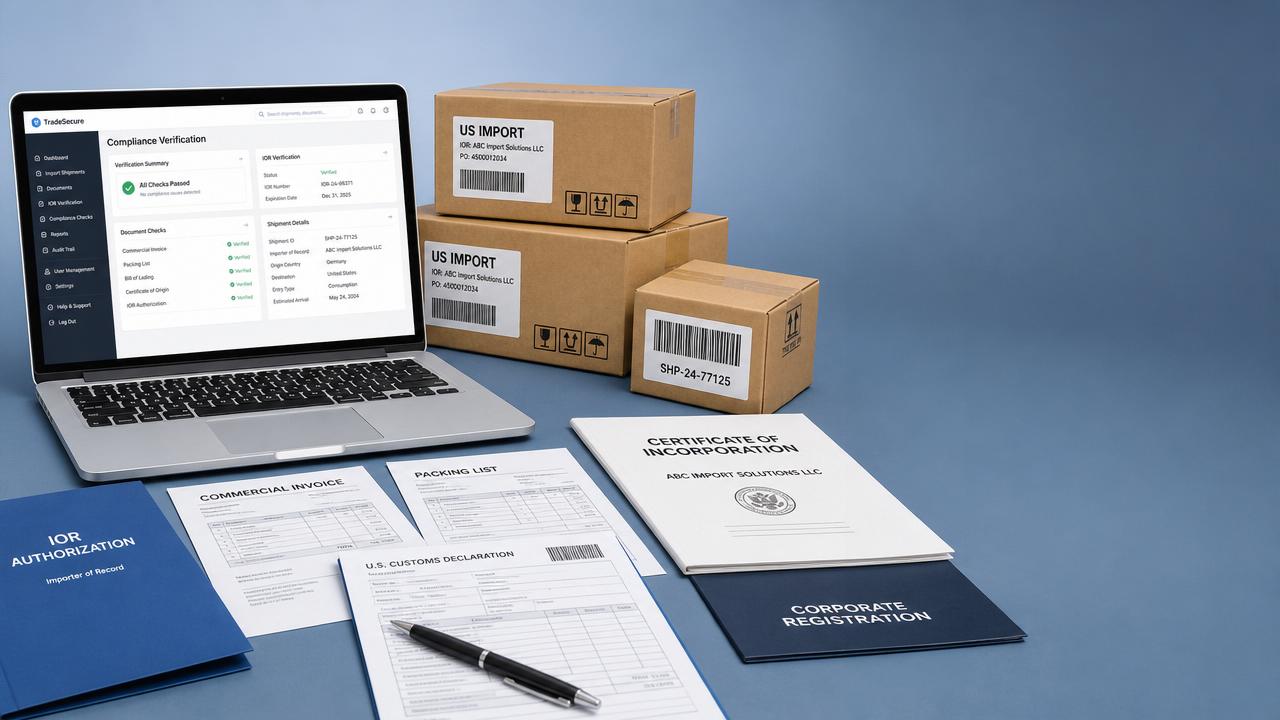
During the June 1-7, 2026 reporting period, U.S. customs scrutiny of Importer of Record authenticity became a more immediate operational issue for cross-border sellers using self-managed import clearance. According to the latest CBP notice dated June 6, the first week of June saw a higher customs clearance failure rate tied to inaccurate IOR identities, drawing attention from small and mid-sized exporters, direct-to-consumer independent site sellers, and supply chain teams responsible for import documentation and authorization continuity.
What the latest CBP notice confirms
CBP stated in its June 6, 2026 update that, following the full implementation of the mandatory IOR binding policy in March, U.S. customs is using AI to cross-check import declaration data against enterprise registration information.
Within the June 1-7, 2026 statistical window, the clearance failure rate caused by inaccurate IOR identity information reached 18.7%, up 23% from the May average.
The provided information also indicates that small and medium-sized exporters using self-owned IOR arrangements should urgently recheck the authenticity of importer qualifications and the completeness of the authorization chain.
Where the pressure is likely to appear first
Independent sellers handling their own import setup
From an industry perspective, this group may face the most direct impact because the issue identified is not general customs congestion, but the truthfulness of the IOR identity itself. The main pressure point is the customs filing stage, where importer identity data, registration details, and authorization relationships must align more precisely.
SME exporters relying on self-managed clearance
Analysis shows that smaller exporters may be more exposed when internal compliance review is lighter or when documentation responsibility is split across multiple parties. What deserves closer attention is whether importer qualification records and authorization documents remain consistent across the full filing chain.
Supply chain and clearance service participants
Observably, service providers involved in filing support, document preparation, and customs coordination may also come under greater operational pressure. The relevant impact is less about a confirmed rule change in this notice and more about a stricter enforcement environment in which data consistency and document traceability become more sensitive.
What companies should review now
Reconfirm whether the IOR identity can withstand cross-checking
Given that CBP is using AI-based matching between declaration records and business registration information, companies should focus on whether the importer identity used in filings is accurate, current, and supported by valid registration details.
Check whether the authorization chain is complete
The provided information specifically highlights the need to review authorization continuity. In practice, this means companies should pay close attention to whether the documented relationship between the importer, the exporter, and any involved filing party is complete and internally consistent.
Separate policy signal from filing execution risk
Analysis shows that the current signal is not only about the March policy already being in force, but also about how that policy is being executed through more data-driven enforcement. Companies should therefore avoid treating compliance as a formal requirement on paper only and instead examine how customs-facing data is actually presented in live shipments.
Prepare communication and delivery contingencies
Where shipments depend on self-owned IOR structures, exporters and operations teams should closely monitor whether documentation review could affect release timing. What deserves closer attention is customer communication, internal approval flow, and readiness for revalidation if a filing is challenged.
Why this looks like more than a one-week fluctuation
Observably, the immediate fact pattern is limited to one reporting week and one stated comparison against the May average, so it should not be overstated as a final long-term outcome. At the same time, analysis shows that the combination of a mandatory IOR binding policy and AI-based cross-checking points to a more systematic compliance focus rather than a purely isolated operational spike.
It is more appropriate to understand this as a strong enforcement signal with continuing implications for importer identity governance, especially for businesses that manage their own clearance arrangements.
How the industry may best read this signal
At this stage, the development is best viewed as a compliance-centered warning rather than a broad conclusion about all U.S. import clearance conditions. Its industry significance lies in showing that IOR authenticity has become a more active checkpoint in actual customs handling, with practical consequences for filing quality, documentation discipline, and shipment planning.
A neutral reading is that the market should continue watching how consistently this level of scrutiny is applied in subsequent weeks before drawing wider conclusions, while affected companies act now on document and authorization verification.
Basis of this article
This article is generated from the user-provided news title, event timing, and event summary concerning stricter U.S. customs verification of IOR authenticity during June 1-7, 2026.
For developments of this kind, relevant source types typically include official notices, company statements, industry association updates, authoritative media reporting, and standard-setting or regulatory documents. A specific official source link was not provided in the input, so the underlying notice and any later clarifications still require continued verification.
Areas for follow-up observation include whether CBP issues additional wording on enforcement practice, whether the reported failure pattern persists beyond the first week of June, and how businesses using self-managed IOR structures adjust qualification and authorization review procedures.