MICAPP
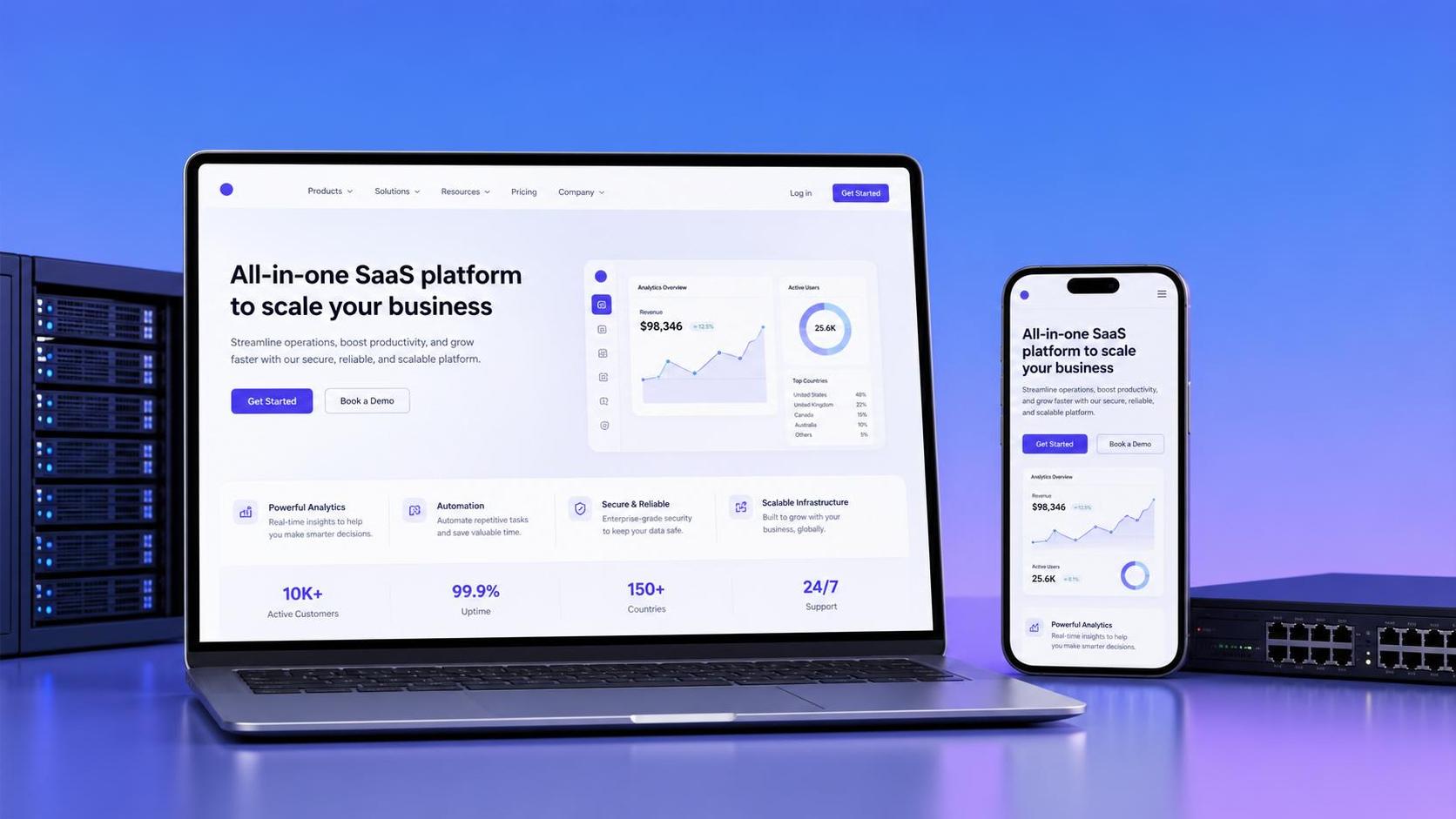
For SaaS platforms building international growth infrastructure, 响应式建站 is no longer a visual preference. It affects how search engines crawl content, how pages perform on mobile devices, and how efficiently visitors move toward inquiry or purchase.
That matters even more in enterprise service SaaS, where websites must support multilingual discovery, product education, lead capture, and long sales cycles. A responsive site that looks modern but misses core SEO rules can quietly limit ranking, traffic quality, and expansion speed.
The issue often appears during platform selection. Teams compare templates, integrations, and publishing speed, yet overlook how responsive website development shapes indexation, content structure, and international search visibility from the start.
Responsive website development is an SEO foundation
In practical terms, 响应式建站 means one site adapts to different screen sizes through flexible layouts, media handling, and consistent content delivery. Search engines usually prefer this approach because it reduces duplication and simplifies crawling.
But responsive design alone does not guarantee strong SEO. A site can pass a visual test and still fail on load behavior, rendering logic, structured content, or mobile interaction details.
For enterprise SaaS websites, that distinction is important. Product pages, solution pages, documentation, multilingual assets, and campaign landing pages all depend on stable technical signals.
Why the gap still happens
Many platforms treat 响应式建站 as a front-end feature. SEO, however, lives across templates, CMS logic, page rendering, URL governance, analytics, and international content workflows.
When those layers are disconnected, responsive pages may look complete while sending weak signals to Google and Bing. Rankings then suffer for reasons that are not obvious in a design review.
SEO requirements SaaS teams often miss
The most common mistakes are not dramatic errors. They are small structural issues that accumulate across hundreds of pages.
Mobile content parity
Some responsive builds hide key text, links, or product details on smaller screens. If mobile users receive reduced content, search engines may also see a weaker version of the page.
For mobile-first indexing, content parity matters. The mobile view should preserve essential headings, copy, internal links, and structured data.
Rendering dependence
Heavy JavaScript can delay content visibility to crawlers. In responsive website development, this becomes a hidden risk when templates rely on scripts for navigation, product tabs, or localized text blocks.
If important page elements appear only after complex rendering, indexing becomes less reliable. Server-side rendering, pre-rendering, or clean HTML output often improves discoverability.
Page speed under real mobile conditions
Desktop previews can be misleading. Large hero images, animation libraries, third-party scripts, and repeated tracking tags often weaken mobile performance.
In 响应式建站, performance should be measured on actual network conditions. Core Web Vitals, image compression, script control, and caching policies influence both user experience and search competitiveness.
Weak internal linking on mobile layouts
Collapsed menus and simplified footers often remove useful link paths. That can reduce crawl depth, especially on large SaaS websites with solution pages and multilingual sections.
A strong responsive structure keeps important links accessible without creating clutter. Search bots and users both benefit from predictable pathways.
International SEO conflicts
Global SaaS growth usually requires language versions, regional content, and localized landing pages. Responsive website development must support hreflang logic, canonical management, and translation governance.
When those rules are poorly handled, pages compete with each other, translations become inconsistent, and regional rankings stay unstable.
Why this matters in enterprise service SaaS
Enterprise service SaaS websites do more than present a brand. They connect market acquisition, product explanation, data analysis, advertising operations, and conversion tracking across multiple regions.
For companies expanding through cross-border e-commerce, the website often becomes the central operating layer. It supports landing pages, multilingual content, campaign attribution, and lead routing at the same time.
That is why providers with broader digital infrastructure tend to approach 响应式建站 differently. A platform tied to analytics, advertising management, translation, and growth operations can reduce fragmentation in SEO execution.
This is also where MaiKaPu’s positioning is relevant. Its website SaaS system, data processing capabilities, overseas advertising management, and Google neural translation support reflect a more connected model for international growth.
The value is not just convenience. It is the ability to align responsive website development with search visibility, multilingual publishing, paid acquisition, and performance analysis inside one operating framework.
What to check when evaluating a responsive SaaS website solution
A useful evaluation starts with technical behavior, not visual demos. The following checkpoints usually reveal whether 响应式建站 will support long-term SEO goals.
Questions that usually clarify platform maturity
- Can the platform manage multilingual pages without duplicating weak content?
- Does responsive navigation preserve important internal links on mobile devices?
- Can teams edit schema, metadata, canonicals, and redirects without developer bottlenecks?
- Are advertising landing pages aligned with the same SEO and performance standards?
- Is there data support to connect traffic quality with conversion outcomes?
How 响应式建站 supports practical growth scenarios
The value of responsive website development becomes clearer when viewed in real operating contexts rather than design theory.
Multilingual market entry
A responsive site with structured translation workflows helps launch localized pages faster. It also makes regional testing easier without rebuilding the full user experience for each market.
Campaign and organic coordination
Paid acquisition works better when landing pages follow the same speed, content, and mobile standards as organic pages. This reduces friction between SEO and advertising operations.
Cross-border e-commerce operations
For brands handling product discovery, independent sites, logistics communication, and payment pathways, 响应式建站 supports consistency across user touchpoints. Search visibility then becomes part of an integrated digital process.
A better way to approach the next evaluation step
The strongest responsive websites are rarely the ones with the most visual effects. They are the ones that keep content accessible, pages fast, data connected, and international expansion manageable.
When reviewing a SaaS website solution, it helps to treat 响应式建站 as part of search infrastructure. That means checking technical SEO, multilingual readiness, analytics depth, and campaign coordination together.
A practical next move is to audit a few key templates first: homepage, solution page, landing page, and localized page. If those templates perform well in crawlability, speed, and mobile content parity, the broader platform is usually easier to trust.
For organizations comparing providers, the useful benchmark is not whether a platform can publish a responsive page. It is whether that page can rank, translate, convert, and scale across markets without creating hidden SEO debt.